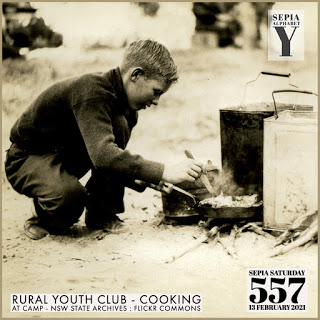
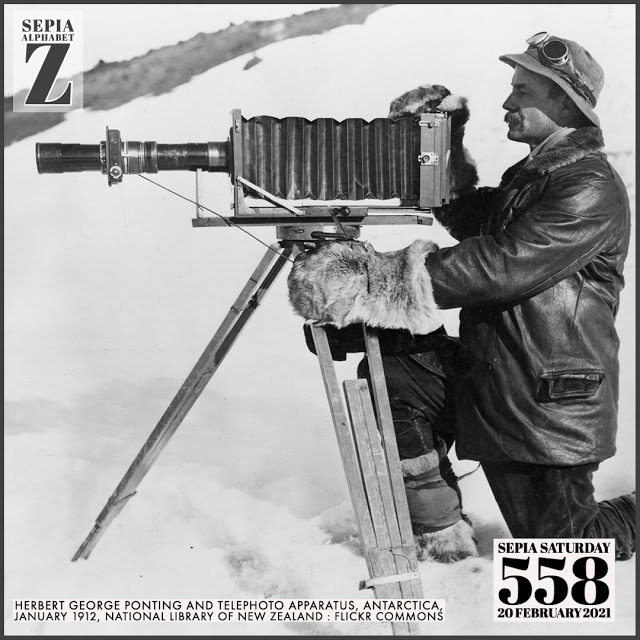
Sepia Saturday provides bloggers with an opportunity to share their history through the medium of photographs. Historical photographs of any age or kind become the launchpad for explorations of family history, local history and social history in fact or fiction, poetry or prose, words or further images. If you want to play along, sign up to the link, try to visit as many of the other participants as possible, and have fun.
I live in Austin, Texas, where the summers are long and sometimes oppressive and the winters are short and not bitterly cold.

Congress Avenue, Austin, in the mid 1970s
We are situated on the eastern edge of the Texas Hill Country, so named because … hills. The highest point of the city is Mt. Bonnell with an elevation of 775 feet. The prominent point sits alongside the Lake Austin portion of the Colorado River.

Photo Credit: Flickr Creative Commons by Randall Chancellor
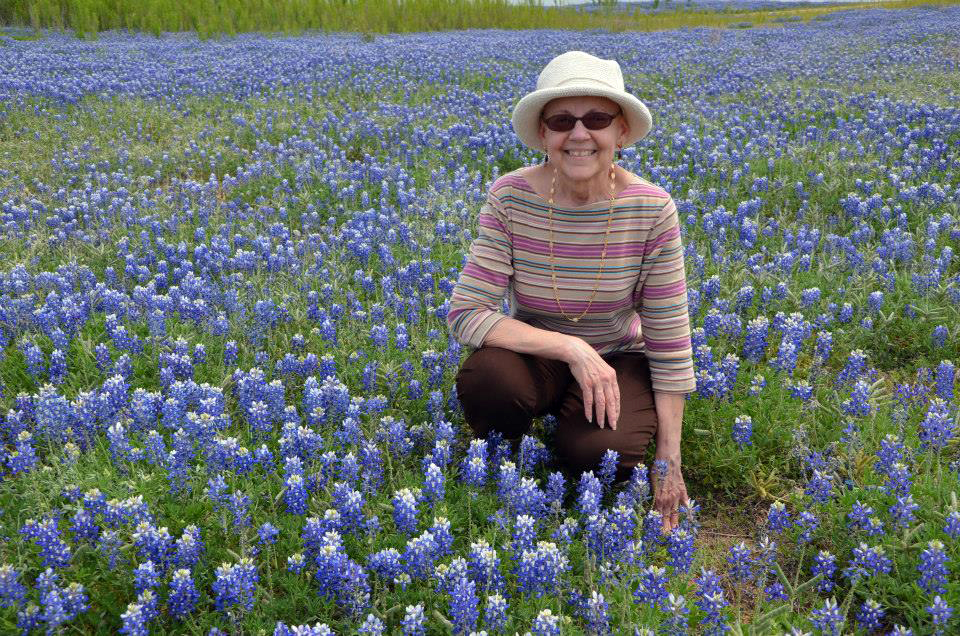
My favorite month of the year is April, when the chill is gone from the air and the days are warm and sunny and the wildflowers are in their glory all along the highways and byways of central Texas. In 2014, we had an exceptional landscape of bluebonnets where parts of Lake Travis should have been. The fertile soil of the lake bottom, exposed by severe drought, filled with a sea of wildflowers where water usually flows.
I experienced my first “blue norther” when my family moved to Texas my junior year of high school. I was at marching band practice. It was short sleeves-and-shorts weather when practice started. In minutes, the cold wind was blowing and it was coat-and-gloves weather. Our plants are often confused by the rollercoaster ups and downs of temperatures. It will freeze just long enough to kill, then rise into the 60s, fooling plants to bud, then freeze again. Sometimes we lose the hill country peach crop when a freeze comes as late as March. Impatient gardeners are warned not to begin spring planting until the middle of the month, but are seen en mass at nurseries anyway.
It rarely snows here. Many years pass without a flake – or maybe with a few flakes that melt on contact with the warm ground. If it does snow, it is short lived and the kids must hurry outside to play in it because it will likely disappear within hours, not days.

December 2008
There might be just enough snow to make a grassy snow angel or a tiny snowman. Maybe a few snowballs to throw at a sibling or parent.

February 2007 Snowball fight with Tina
In the event of snow, we take pictures. Lots of pictures.

February 2004 Behind our house
Any freezing precipitation is usually freezing rain or sleet rather than snow, coating the roads in a layer of ice. When we close our schools or have traffic accidents we are the butt of jokes, but really, who can drive on ice? Ice and hills do not make for safe driving, especially school busses trying to deliver children safely to school. So keep your derision to yourself, please.

January 2007 An icy mix
When it snowed on January 10, we thought we had had our winter.

10 January 2021
But no.
Freezing weather returned on February 11. Rain and freezing rain iced the roads as temperatures fell, causing several pileups on major roads. And that awful situation in Ft. Worth! Some power outages occurred due to ice-laden tree limbs falling onto power lines.
But this was just the beginning, as four additional winter storm systems passed through in the span of a week (or so). I’ve lost all concept of time, so I’ll just say we had a 6.5 inch snowfall in Austin and a record 140+ consecutive hours below freezing, including some record-setting single-digit temperatures. The current plight of the entire state is all over the news. Millions with no electricity. Hospitals that lost heat and potable water. Households without running water. Many have been in dire straits. Lives have been lost.
My husband and I and my daughter and her husband have been extremely lucky. She lives near downtown, an area protected from controlled power outages because the state capitol is nearby. My husband and I aren’t sure why we were spared. Half of our neighborhood lost power for a couple of days later in the system failure. All we can figure is that there is a senior living center adjacent to one side of the neighborhood, so maybe we share the grid with them. We have many friends who went without power for 60 hours.
We have tried to be judicious in our use of electricity – turning down the thermostat, using only one light at a time, unplugging what was not essential or being used. We did allow ourselves television and my husband had to continue work from home, as he has been for a year now.
Thankfully spared from losing electricity, we did lose running water. I think today (Saturday) is day four. I couldn’t keep track of time due to the pandemic, but I have truly lost all sense of time now! Fortunately, we have a supply of bottled water, so drinking water has not been a problem. We filled two bathtubs with water before our pipes dried up, so the first day we were feeling ok about our ability to flush. But we began to worry as more and more areas of town lost water and we were told to expect this to last for days. So Thursday we refilled the tubs with snow and yesterday, we worked in earnest to stock up as the snow began to melt. We hope our supply of melted snow holds out. We don’t want to use our drinking water reserve for flushing!
Today, our neighborhood association decided to allow residents to get water from the two swimming pools. And a truck was in the neighborhood to distribute potable water.
I’ll share some of my snow photos with you. Not all of them are pretty.

15 Feb 2021 snow drift on the balcony

15 Feb 2021 view from the front window. Copper plants covered with snow
If you are wondering what’s up with the trees on the left – I yarn bombed them for Christmas and did a change over for Valentines Day.


Befuddled dog wanders and wanders searching for a place to “go”.


The little dog was not as brave. We don’t have a snow shovel, but now have a snow broom that my husband used to try to help the little one venture out.

One of my friends shared the photo below – quite a sight in our neighborhood – the bottom of a hill by the neighborhood park.

Wildlife was also impacted by the weather. A pair of roadrunners live in the greenbelt behind our house. It is fairly common to see roadrunners about, looking for food. Sometimes one will come into the back yard in the heat of the summer to get a drink from the birdbath. On snow days one and two, I saw a roadrunner on our back patio, feathers puffed out, sitting for a bit, then going on its way. That is behavior I have not seen before and I worried about them. Our bird feeder was very popular until it was encased in ice by day two or three. Thursday I found footprints on the front porch (deer?), and as I looked down the length of the porch, I spotted a frozen bird.


The next day, I heard birds hit a window a few times – even though blinds and curtains were drawn. By Friday morning, the frozen bird had disappeared. Only a few small feathers remained. The snow on the porch was gone by then, so no footprints to reveal who had happened upon a meal. A friend in the neighborhood also had disoriented birds hit her window and watched as a hawk flew in, grabbed a stunned bird, and flew away. So it may have been a hawk that cleaned up for us and got a meal as reward.
Thursday we began harvesting snow. My husband took a bucket to the back yard and shoveled snow. I took a bucket to the front porch and harvested the leaves of the copper plants – because I could do it without getting my feet wet. My process was slower, but satisfying. 
Begonia blooms dyed the snow.

I strongly dislike the nandina that are planted around our house. No matter how hard you try to get rid of them, they never die. I’m sure they will survive.

There will be bathtubs to thoroughly clean when this is over.

Friday, my husband shoveled more snow before going to work upstairs. Some of the snow started melting and I was able to collect water as it dripped from the roof. A much easier way to collect snow! A bucket of snow is easy to carry upstairs, while a bucket of water is not!


After days of low light and a chilly home with no running water, I felt as though I was living in The Long Winter and hoped that Pa would take out his fiddle and play for us after another day of harvesting toilet water.
Thankfully the roads are free of ice now, the temperature hit the 50s today, and it will stay above freezing tonight. No one will freeze to death here tonight. Lives will begin to return to coronanormal, as we continue to boil water for a while, broken water pipes are eventually repaired, grocery stores and gas stations are fully open, and schools return to some kind of open. Once again, disparities are on display. A few jerks are too (I’m looking at you, Texas Senator Ted Cruz) … and some official responsibility-avoiders. But overwhelmingly, neighbors, businesses, friends, churches, strangers, and medical, emergency and essential workers have come to the rescue.
Well, I have worked on this post off and on during the day (Saturday). I got a text from my next door neighbor about 10:00 p.m. saying that she had a trickle of water in a downstairs bathroom. So far, none for us. As it is now after midnight, we are on to day five without running water. Her text gave me hope. Maybe tomorrow! We would really like to shower! I usually attend Zoom church on Sunday mornings, but if there is no shower beforehand, I’ll be joining without video this week.
Please sled, ski, or slip on over to Sepia Saturday where you can click on the links to see what others have prepared in response to the prompt photo today.