Sepia Saturday – From Sicily to New Orleans

Sepia Saturday provides bloggers with an opportunity to share their history through the medium of photographs.
I had such high hopes.

I knew just what I would do.

I would follow up on last week’s post about my husband’s family.

I’d locate the passenger lists showing the arrival of Frank Mamola and Angelina Siragusa to the United States. I’d find pictures of the ships that carried them. I’d even throw in what I could find about the other people mentioned in a 1953 newspaper article highlighting 5 living generations of their family.

That was the plan. It would be easy.

But here I sit on Saturday morning. Hardly a scrap of anything for all my looking about.

Where to begin to share my almost nothing? The chronological order of my search? Or take the newspaper article bit by bit?

I think I’ll go with the newspaper article as my guide.
Frank Mamola

A search of Frank Mamola in the passenger lists at ancestry.com and familysearch yielded nothing. Census records both confirm and disagree with the 1888 arrival date.

The 1900 U.S. Census for Denison, TX shows the OMamala family – an Irish take on the name! – with an 1883 arrival date for Frank and 1886 for Angelina. The birthdates for both seem right, but with that arrival date, Angelina would have been 10 when she arrived and married.

The 1910 census shows both of them arrived in 1888. Interestingly, Frank had been married for 17 years, while Angelina had been married for 18. How does that work?

1910 U.S Census

The 1920 Census has Frank arriving in 1887, Angelina in 1892, and indicates that Frank was naturalized in 1890 – before Angelina arrived, thus giving her citizenship with their marriage.

1920 U.S. Census

The 1930 census indicates that both were immigrants, but gives no arrival dates.

All I could find about Frank was after he settled in Denison, TX. No passenger lists. No marriage records. No naturalization records. It’s going to take a lot more work to find pre-Denison records for him.

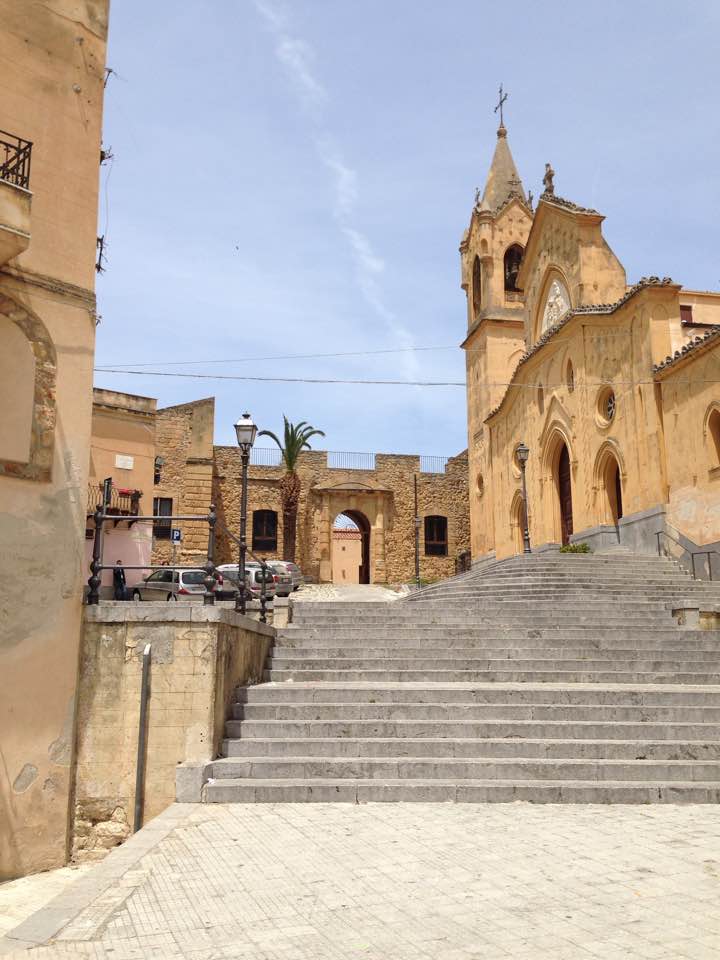
My husband tells me that Frank Mamola was from Mezzojuso, Sicily, and was of Albanian descent. I’ll take his word for it. The families of 48 Albanian soldiers settled in the nearly vacated village in the early 15th century. Mezzojuso is home to two historic Catholic churches both dating to the 16th century: the Latin-rite parish Church of Maria Santissima Annunziata and the Byzantine Greek-rite parish Church of San Nicolò di Mira. Let’s pretend that Frank Mamola attended the Church of San Nicolo di Mira because he probably did. And imagine him running around the square with his friends as a boy.

My husband, daughter, and I traveled to Mezzojuso in May 2017. Below you can see the two churches that stand side-by-side. The Latin rite church on the left edge of the photo is more golden in coloring and the Greek rite church to the right with the cross visible.

Mezzojuso two churches

This view features the Latin rite church, the Greek rite church out of frame on the right.
Here we are with some of my husband’s relatives (not related to the Mamola’s, but also originally from Mezzojuso), in front of the church that Frank Mamola may have attended growing up in 1860s-70s. I’m the short one.

A cousin drove us up La Brigna – Mezzojuso sits on the slope of the mountain. It provided a lovely view of Mezzojuso. You can see the twin churches sitting together on the town square.

Mezzojuso, taken from La Brigna

Back to the newspaper article…
Angelina Siragusa

The Angelina in the story is Angelina Siragusa, who my husband tells me was from Campofelice di Fitlalia. I don’t know her brother’s name. Later in the article, a couple of other names are mentioned as fellow passengers on the ship with them.


Too bad about that big smudge! It would have helped me confirm if I located the correct passenger list for Angelina. This one looks promising – The S.S. Italia leaving port at Palermo, Sicily and arriving New Orleans, LA on November 9, 1891.
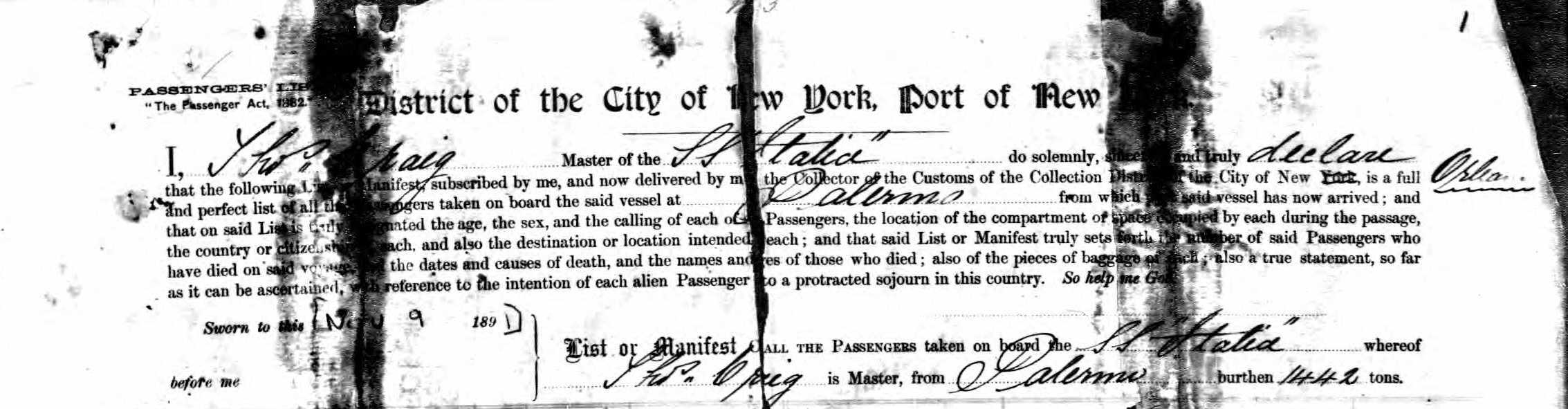
Just like the newspaper article, this document has lots of missing and unreadable parts, making my search more difficult. Here is an entry for a female passenger, age 16, named Angelo Siracusa.

Is this our Angelina Siragusa?

Now to find a brother … There is a male passenger with the surname Siracusa.

Angelina’s brother?

It looks like his first name might be Salvatore? And his age? 34? That would make him a much older brother to 16-year-old Angelina. And look at the name two above his – a Parrino! Although it is Giuseppe, not Sebastian. Are there other Parrinos? Yes, there are! Could passenger #338 be Sebastian?

Sebastian Parrino?

The article also mentioned someone with the surname Gattuso as a fellow passenger. I did not find that name. Some of the names are simply missing from the document. Or maybe I got tired.

And there was an interesting, but puzzling entry. Passenger 792.

A 7-year-old girl named G ???? Siragusa. Is she related? Another mystery.

I’m not absolutely positively sure that this is the passenger list for our Angelina Siragusa, but it could be. I couldn’t find a picture of the ship either. There were three S.S. Italias and I couldn’t find a picture of the one in service in 1891.

As I stated previously, Angelina is said to have been from Campofelice di Fitalia, a village near Mezzojuso. In fact, for many years – until 1951- it was under the administration of Mezzojuso. Google maps tells me it is a 10 minute drive from Mezzojuso to Campofelice. You would think we would have gone there since we were so close. But we didn’t. The main road was out because of a rock slide a couple years earlier and was still under construction, making the trip much longer and, I assume, on unpaved roads. Our host is not related to that side of the family and we had just a short time there anyway, so no visit to Campofelice.

When I was looking back at pictures from our trip for this post, I found one I took from up on La Brigna that I hoped was looking down on Campofelice.

I asked our guide/cousin from our trip. Unfortunately it is not. It is the road Contrada Lacca and the larger group of buildings is a cemetery. I wonder if there are Mamolas and Siragusas there? Salvo also sent me this satellite view to help me get my bearings. It took me the longest time to figure out that his google satellite view was upside down from the one I got when I searched. No wonder I was so confused! The blue X marks the spot where we were standing when I took the photo and the road we looked down on is circled.

And here is the road (now open) to Campofelice, 6.7 km from Mezzojuso.

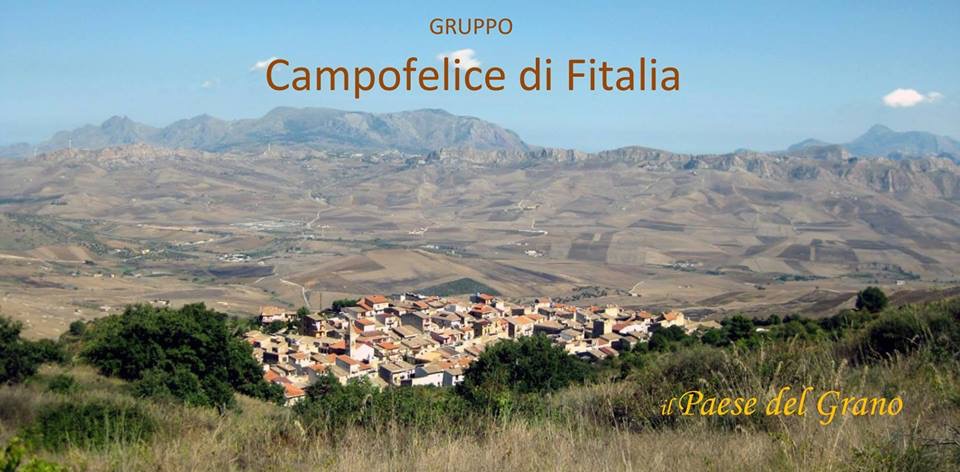
Here is the real Campofelice di Fitalia.
I’ll highlight one more paragraph from the newspaper article.

So here we have a 16-year-old girl from a tiny village in Sicily. She had probably never ventured much farther from home than Mezzojuso before traveling to the big city of Palermo to get on a ship to America. She lived in farming country, in a place where everyone knew everyone else and their complete family history. Superstition and the evil eye were real. But why would Angelina think one of the Parrinos had the ability to change a person’s skin color? Had her brother and Sebastian been teasing the gullible younger sister? Did the Parrinos have a reputation for casting curses?

I’ve tried to imagine what that voyage was like for Angelina. She traveled in steerage, so not a luxurious cruise by any means. I’d think she would have liked to clean up a bit before meeting her husband-to-be and being rushed to the altar (or wherever) in less than an hour! How overwhelming all of this must have been.

Perhaps this was her first view of her new country.

New Orleans from the harbor c. 1900

New country.
New husband.
New language.
New everything.

Yet, it appears she weathered it well.

Frank Mamola, Angelina Siragusa, and their adult children

P.S. We think my husband favors his great-great-grandfather Frank Mamola. A few years ago a family-run Italian restaurant opened near our home. When we walked in the first time, everyone in the family made over us because my husband looked just like Uncle Somebody – and they are Albanian. Every time we went in, they would give us a free sample of something.

Sail on over to Sepia Saturday and see what tales others have to tell.

Sepia Saturday – Baby in the Middle

Sepia Saturday provides bloggers with an opportunity to share their history through the medium of photographs.

A photograph from my husband’s family features a woman wearing a dark hat with feathers and a white suit with vertical stripes. There is a baby in the middle, but without a hat.

Louis Parlati, Tenna Mamola, Angela Parlati

The photo is of my husband’s great-grandparents and his grandmother – Luigi (Louis) Parlati, his wife Gaetana (Tenna) Mamola, and baby Angela Parlati. Louis immigrated from Italy. Tenna is said to have been the first baby of Italian descent born in the Denison, Texas area. Angela was born in April of 1911 in Houston, Texas, which gives us an approximate date and location. As an adult, Angela worked in the millinery department of a store, yet I don’t recall any photographs of her wearing a hat. Well … probably in wedding photos, but nothing like the above.

In a photograph featuring five generations, the baby above is grandmother to the baby below.

Angela Parlati, Tenna Mamola, Martin, Angelina Siragusa, Joan Loverde (back)

All of the women are looking adoringly at the baby – my husband.

This photograph accompanied an article in a newspaper. Unfortunately, all we have is a photocopy of the article that does not include the photograph; it is undated; and the newspaper is not identified. It was written in 1953, but I can’t find an online copy of the article in full. I wish I could because parts of the copy are unreadable.

The Mamola Family Saga
Tale of Texas Pioneers

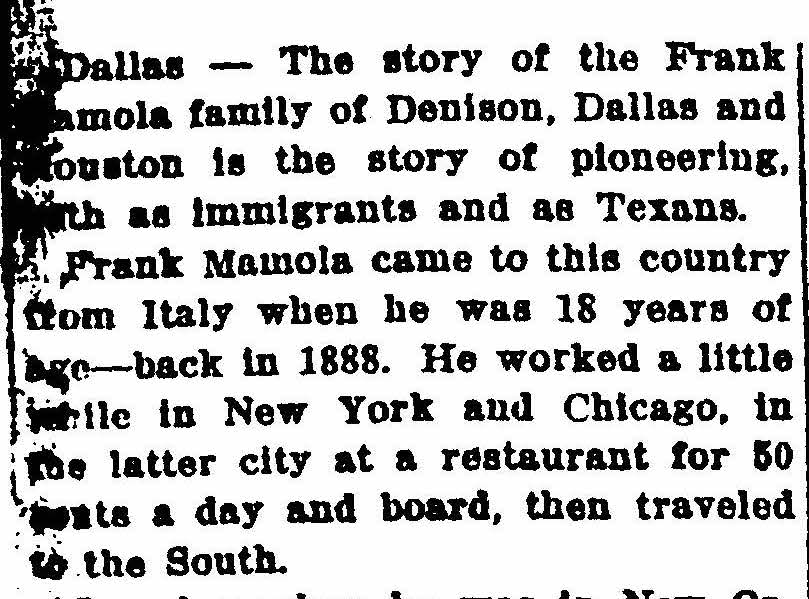
 Dallas – The story of the Frank Mamola family of Denison, Dallas and Houston is the story of pioneering, both as immigrants and as Texans.

Frank Mamola came to this country from Italy when he was 18 years of age – back in 1888. He worked a little while in New York and Chicago, in the latter city at a restaurant for 50 cents a day and board, then traveled to the South.

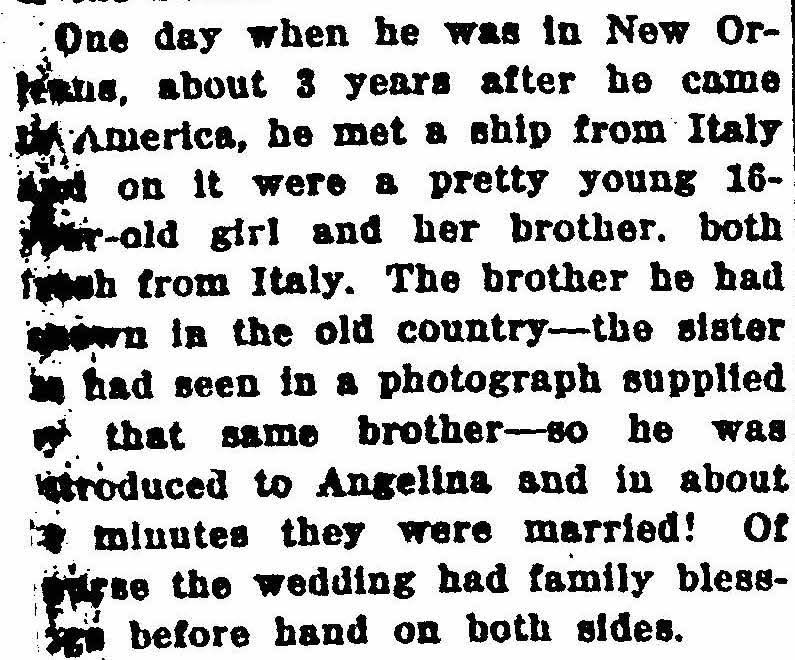
One day when he was in New Orleans, about 3 years after he came to America, he met a ship from Italy and on it were a pretty young 16-year-old girl and her brother, both fresh from Italy. The brother he had known in the old country – the sister he had seen in a photograph supplied by that same brother – so he was introduced to Angelina and in about 3? minutes they were married! Of course, the wedding had family blessings before hand on both sides.

So the Mamola family came to Denison – the first Italians ever to move into that city. When their daughter Tenna was born, she was the first Italian child born in that part of the state.

Mr. Mamola ran a little fruit stand and some of his constant customers were the Indians from across the line of “Indian Territory” as Oklahoma was then called. There were no sidewalks and there wasn’t even a floor in the little shop, the tables sitting on the ground. There were streetcars though, dawn by oxen!

Mrs. Magnolia remembers when P??? Tobin, railroad engineer, drove the first Katy engine out of Denison, making railroad history. She remembers when Carrie Nation visited the town – a wide-open, raw, boom town – and smashed saloon windows up and down the street, her method of direct action again Demon Rum.

She remembers Dr. Acheson of Denison, first mayor and the owner of the first automobile – Model T Ford, of course.

And with all that remembering, Mrs. Magnolia is still well under 60 years of age.

[I interrupt this news article to explain who Mrs. Magnolia is and to add a photograph. Mrs. Magnolia is Lena Mamola Magnolia – sister of Tenna and daughter of Frank Mamola and Angelina Siragusa (the 16-year-old bride). Lena was obviously interviewed for this article and provides much of the detail. Here is a photograph of her wedding to Frank Magnolia. Lena is not wearing a hat. Tenna is seated on the right. Louis is standing right behind his wife Tenna.]

Wedding of Frank Magnolia and Lena Mamola

Mrs. Mamola, who has lived with Mr. and Mrs. Magnolia for more than 20 years – her husband died 20 years ago – also remembers that when she landed in New Orleans, a girl of 16, she saw a Negro for the first time in her life and was panicky for fear Dallas Parrinos, well known in the city, turning people black!

On the ship with Mrs. Mamola – which, by the way took 60 days to make the crossing, while that of Mr. Mamola’s journey took 120 days – were Mr. Sebastian Parrino, father of the Dallas Parrinos well known in the music, restaurant, and ????ing work today. Also on the ???? was Gattuso and F????? ???? – all of whom long ago established families in  Dallas.

The second Italian family to arrive in Denison were the Pasteres and after them Frank Mazzi and his family. Then, Mrs. Magnolia said, they really started coming and she lost count. Denison was growing, ??? building brick stores, sidewalks and paved streets – it was becoming a city.

Nevertheless, when she met Frank Magnolia, she refused to live in Dallas. Her reason?

“They say Dallas is such a big city you could die and your next door neighbor wouldn’t know it. I’m a small town girl.” Frank, who was very much in earnest about marrying his Lena, thereupon went to Denison to live for a time. But having married the gal, he then laid down the law and back to Dallas they came, bringing the whole family with them.

Mrs. Mamola celebrated her ??th birthday recently.

She has three children – Mrs. Magnolia of Dallas and Joe Mamola, also of Dallas, a buyer for 26 years at Sanger Brothers.

Although Mrs. Mamola is now a great-grandmother, her family is not large. The Joe Mamolas have no children, the Magnolias one, Mrs. Ralph Nicosia, Dallas; and Mrs. Parlati has two daughters, Mrs. Joe Loverde and Mrs. Harry Bowles, both of Houston. Between them they have ???? children and Martin Morals (sic) III. This boy begins the 5th generation of the living Mamolas.

Her great-great grandson, is the great-grandson of Mrs. Parlati, the grandson of her daughter, Mrs. Joe Loverde.

A heritage of which anyone can be proud is that of families like this one. From great-great grandfather Frank Mamola, who did not have time to go to school in Italy, but who learned English at night school, to little Martin Morales, III, who some day, who knows, might be President of the United States – or at the very least, a leading Texan, rich in material wealth and in civic service.

Of such is Texas made.

The photo below appears to have been taken on the same day.

Angelina Siragusa Mamola and Mart

Someone wrote on the top left corner of the photo:
Mama Mamola
Mart Morales
5th
Generation in
family

I’ll end with a photograph of the Frank and Angelina Mamola family with their adult children. No one is wearing a hat.

Seated: Frank Mamola and Angelina Siragusa Mamola
Standing: Tenna, Joe, Lena, and John Mamola

This newspaper article provides so many leads for research and back stories! I’m anticipating adding to this story with next week’s prompt.

Whether hot or cold, sunny or raining, it is always hat weather. Put on your traveling hat and visit other participants at Sepia Saturday.

Sepia Saturday: Lola – When she was Zsa Zsa the Poodle


Sepia Saturday provides bloggers with an opportunity to share their history through the medium of photographs. (I usually stop here when I copy the description…)

Historical photographs of any age or kind (they don’t have to be sepia) become the launchpad for explorations of family history, local history and social history in fact or fiction, poetry or prose, words or further images. (… but this week, I’m taking that “don’t have to be sepia” and “any age” to heart.)

I’ve been wanting/needing to write about our recently departed pet. After all, she was a part of our family and deserves to have her story told too. So I’ll take advantage of today’s prompt photo and see where it leads. (Non-spoiler alert: I succeeded in not going to the sad place today, so it’s safe to read on.)

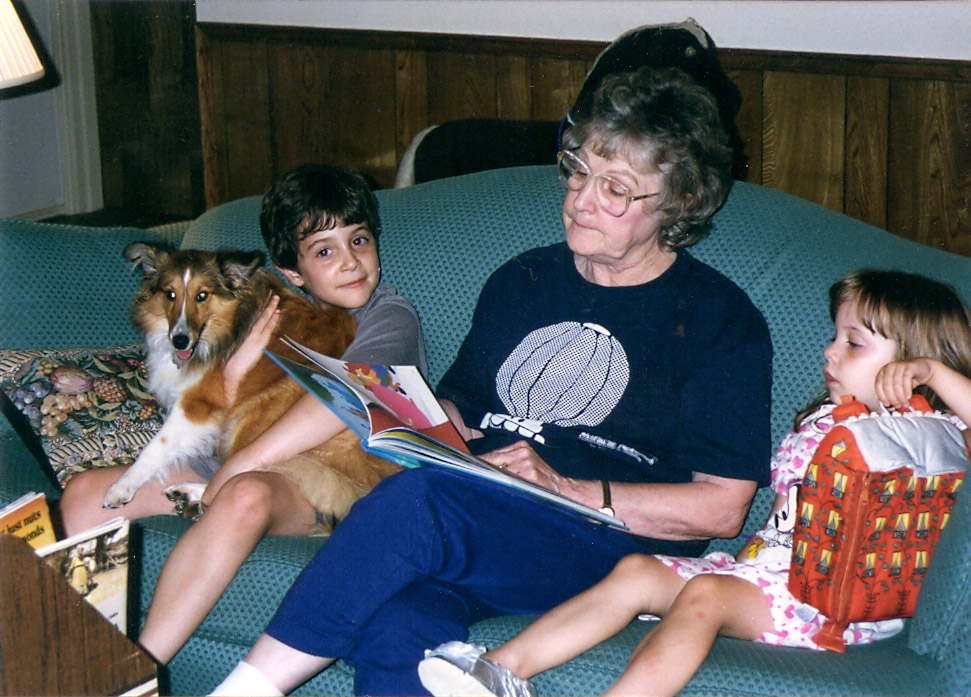
Our family’s first dog was a sweet sheltie named Ginger. She died on the night of my son’s high school graduation while he was at the senior lock-in and I was a volunteer mom helping out. In the picture below, you might recognize my mom from last week. The boy holding Ginger is the future graduate.

After Ginger died, we were all so very sad and my husband wasn’t convinced that we should get another dog. Our youngest daughter had already been nagging us for a puppy before Ginger died, so she kept up her online search of rescue puppies. My son said if we were going to get another dog, to please do it before he started college so that he and the dog would have time to know each other. I got onboard, but I kept looking for shelties to rescue because Ginger was such a sweetheart.

My daughter found a young poodle online that looked like a good candidate, so I called the rescue group about him. The rescue group had a “meet the pups” event scheduled, so we went to meet him. Unfortunately, we just didn’t “click” with Freeway. We sat there on the floor with a room full of dogs and people hoping to make a match. Our match was not there.

A volunteer came over and sat with us. She had questions:
Had we had a dog before?
Did I work outside the home resulting in long periods of time with no one at home?
Did we have other pets?
Were there younger children at home?
Yes. No. No. No.

She called to another volunteer to join us and told us that there was another dog that they had not yet made public because she was so young. They were looking for the right family for her. Would we be interested in meeting her?

Why yes, since you think we are the perfect family!

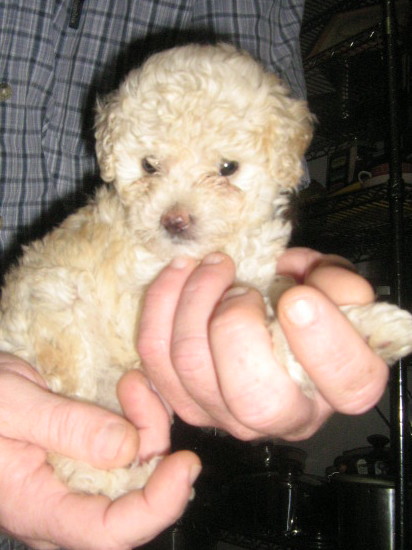
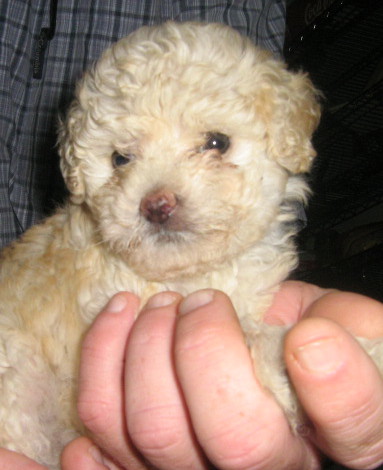
She told us that she was fostering the little puppy in her home. A sixteen-year-old girl bought the puppy for $200 out of the back of a pick up. When she got the puppy home, it wouldn’t eat. The girl and her father took the puppy to a vet who told them that the puppy was too young to have been separated from her mother and needed to be bottle fed. The dad convinced his daughter to relinquish her and that’s how the puppy ended up with the rescue group.

We arranged a time for the foster mom to bring the puppy (a poodle) to our house so we could meet her. We fell in love with her tiny cuteness. The foster mom bragged about how smart she was. She was so young, but had already learned how to use the doggy stairs to get up on their couch! Her husband worked at home, so he spent hours holding the puppy and was really attached to her. They had given her the name Zsa Zsa.

Zsa Zsa sounded like she might already be a wee bit spoiled.

By now, Zsa Zsa could eat solid food so we arranged a two-week trial adoption. My daughter and I drove to the nearby shopping mall where we had agreed to meet the foster mom in the parking lot by Sears.

Zsa Zsa seemed excited to see us, and the foster mom was sad to see her go because she had become so attached to her. She left us with a pink fleece blanket and said maybe it would be a special blanket to her. I vaguely remember meeting up with the foster mom at an emergency vet not long after – I don’t remember the circumstance – and her former mom brought a toy for her.

Zsa Zsa was so tiny (1.6 pounds if I remember correctly), that I went all around the house and yard blocking spaces that she might slip into or out through and get into trouble. The space between the refrigerator and the wall. The space between the gate and the fence. The spaces in the wrought iron gate. The space between the piano and the wall. We kept a close eye on her outside because she could have slipped between the spaces in the chain link fence and I could imagine a big predatory bird flying off with her.

The foster mom told us that Zsa Zsa slept in a crate at night with no problem. I think she lied. Zsa Zsa sure put up a ruckus when we put her in her crate that night, carrying on and on and on. My daughter wanted the puppy to sleep in her room, but when she got no sleep, we put her in our room the second night. My husband couldn’t take it, so he took her out of the crate and put her in bed with us. I was not pleased. We did sleep, though.

The name Zsa Zsa didn’t really fit her personality. Too frou frou, we thought. We tossed around names for a couple of days and finally settled on Lola.

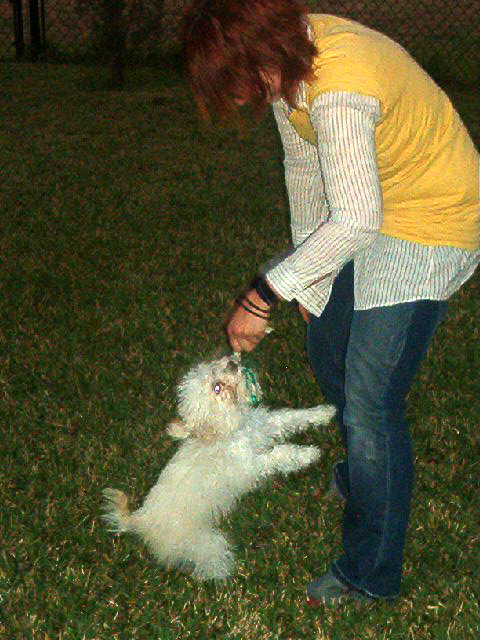
Lola was never reserved or shy. She believed everyone should know and love her. It was her life’s purpose to make it so. She loudly proclaimed her desire to love and be loved every time someone new entered her space.

Lola was so young when we got her that she had not been vaccinated. The first time I took her to the vet there were quite a few people and pets in the waiting room. I did not want her down and exploring since she hadn’t had her shots, so I kept her on my lap. Lola made a lot of noise. It was embarrassing. When we were finally called back, the vet tech said, “She sounds like she is in pain. I should get the vet to check her out.” “No,” I assured her, “She just wanted to get to all of the people in the room. She’ll be fine now.” Lola had stopped wailing and focussed her attention on the vet tech, confirming my diagnosis.

As Lola grew, she began to get shaggy and needed grooming.

I took her to the groomer we had used for Ginger. When I picked her up, the groomer suggested that we be very regular with her grooming so Lola would get accustomed to it. The second time I took her, the groomer called me to come for her before she was even finished. I knew she wanted Lola out the door as soon as possible. Obviously, the groomer was not a fan of Lola’s loud protests at being crated and wanting attention. Also, I said something about Lola being a poodle. “This is no poodle!” she said with disdain in her voice. “I breed poodles and this is no poodle. This is a bichon.”

We never went back to that groomer.

Zsa Zsa the poodle was now Lola the bichon.

And the man who thought we shouldn’t get another dog was smitten.

Just like Zsa Zsa’s foster father before him, my husband spent a lot of time holding Lola and became very attached to her.

We signed the adoption contract on October 28, 2007.

We were a match.

Dog tales, I’m guessing, at Sepia Saturday this week. Walk on over and meet a few more of man’s best friends.