Sepia Saturday – Letters from the H.M.S. Birmingham

Sepia Saturday provides an opportunity for genealogy bloggers to share their family history through photographs.

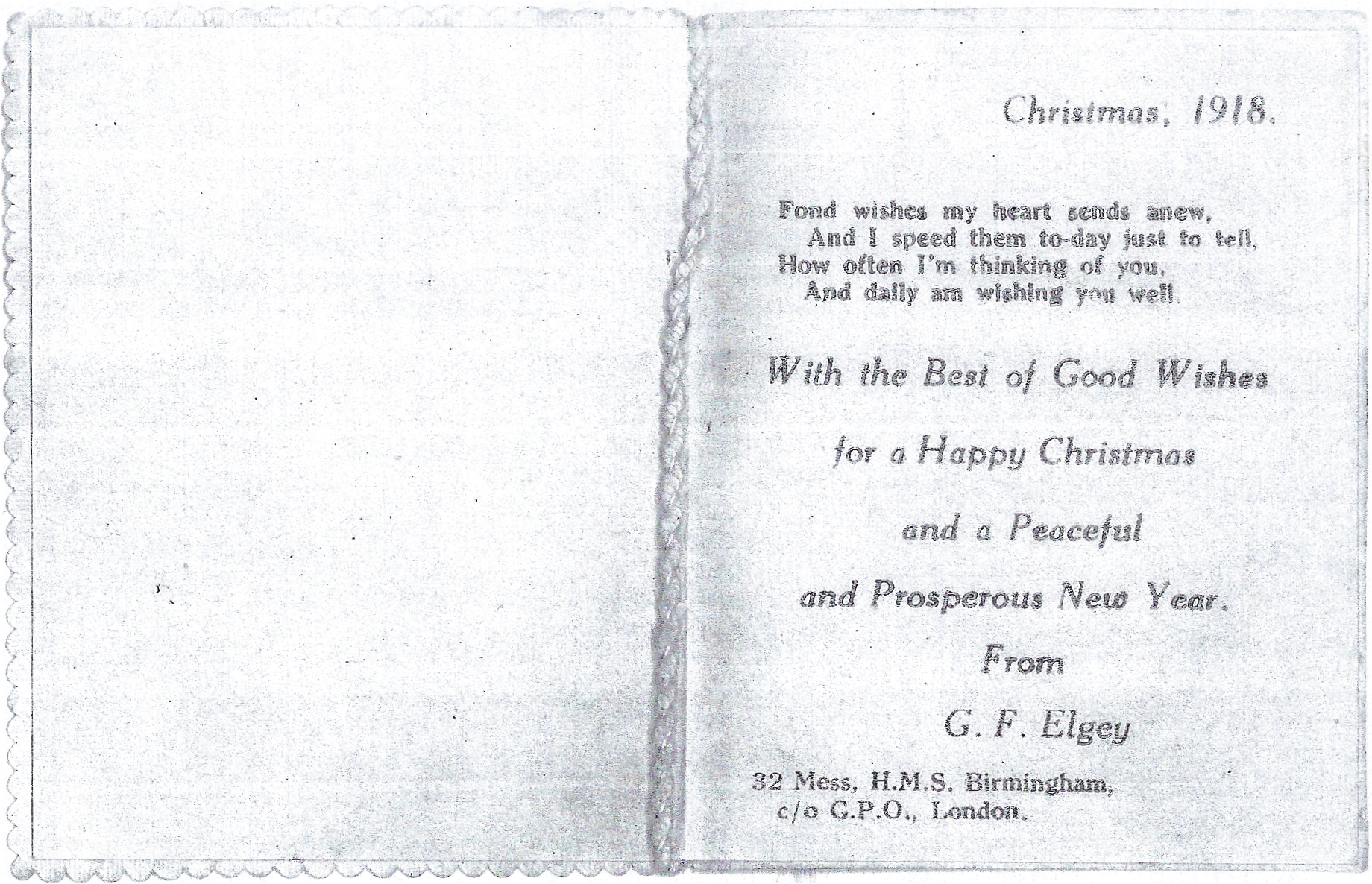
My first thought upon seeing today’s prompt was of a Christmas card sent from the H.M.S. Birmingham to my grandmother, Eveline Coates.

I thought I had a scan of the card or maybe the card itself, but unfortunately, all I have is a Xerox copy. Drat.

I’m going with it anyway.
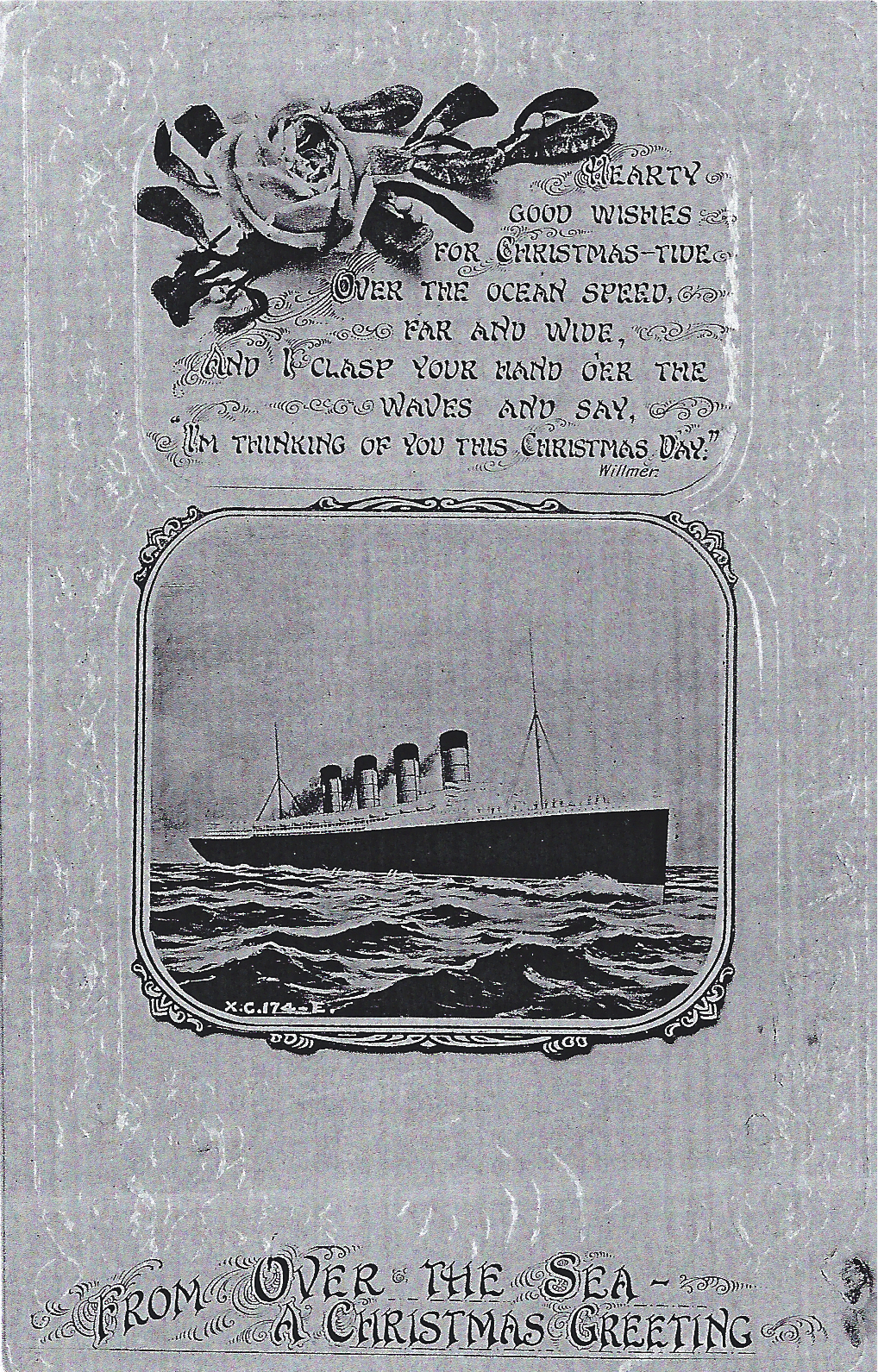
 

The Christmas card, featuring a Navy vessel, was sent by this handsome young man.

George Elgey

George Elgey was my grandmother’s cousin.
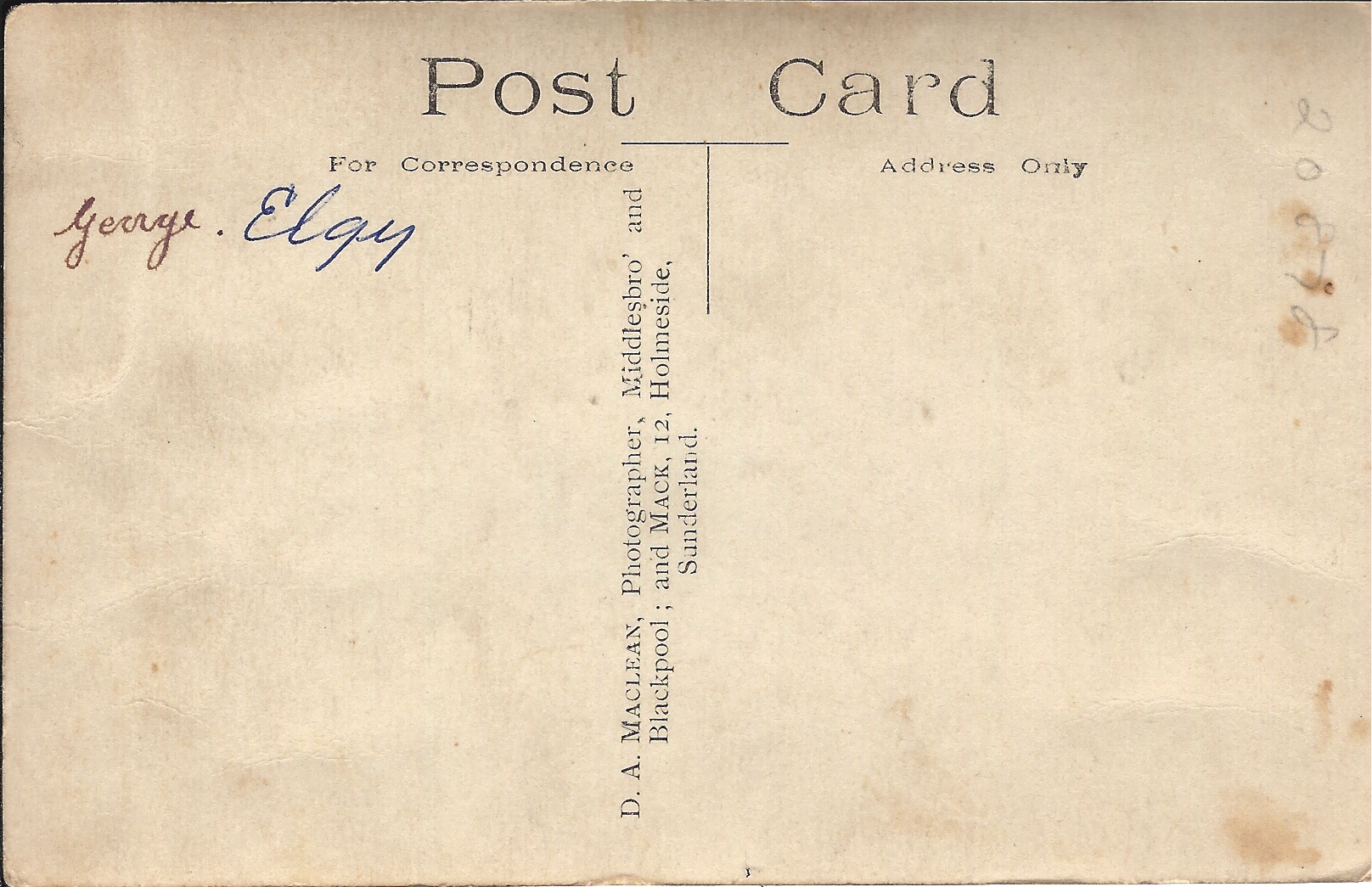
George signed his name on the back of this photo. Eveline added his surname.

Eveline in brother John's WW1 uniform

George was born in Easington Lane, Durham, England on June 10, 1899. Eveline was born in Mystic, Appanoose, Iowa, USA, on February 15, 1901. Although first cousins and close in age, they never met.

George’s mother, Jane Ann (Jennie) Coates, and Eveline’s father, Joseph Coates, were siblings. Joseph boarded a ship as a young man sometime around 1889 and made the journey across the Atlantic. As far as I know, Joseph never saw his parents or siblings again.

George joined the Royal Navy sometime before August, 1918. Eveline graduated from Mystic High School in 1918 and entered normal school in the fall in Cedar Falls, Iowa. Both away from home for the first time, but under very different circumstances.

Eveline corresponded with her Aunt Jennie and several of Jennie’s children for many years. I am fortunate to have copies of a few letters sent to Eveline. It is one of my fondest wishes to find an “English cousin” in possession of the letters Eveline wrote.

I have a copy of one other bit of correspondence from George to Eveline, sent from the HMS Birmingham in August of 1918.
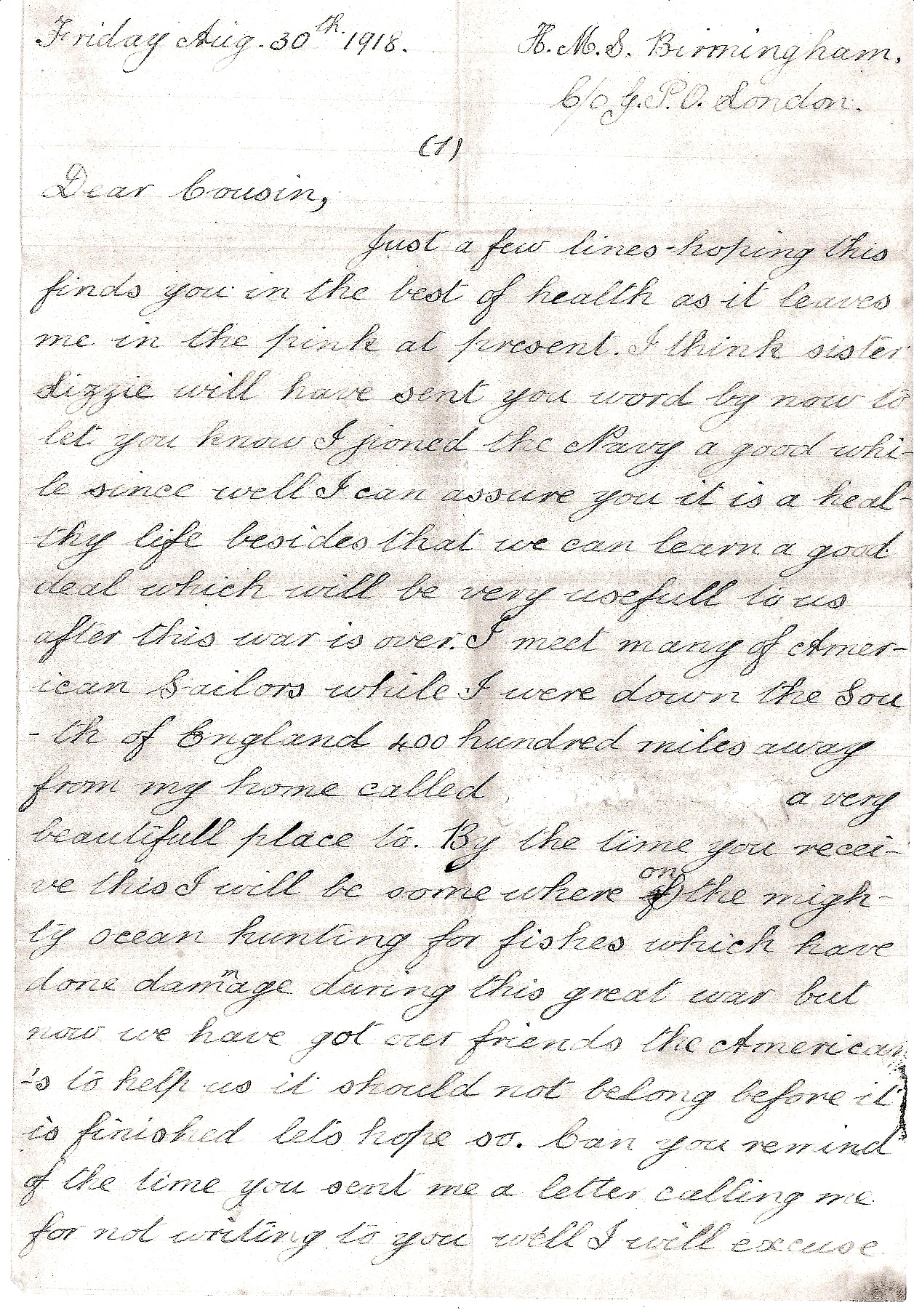
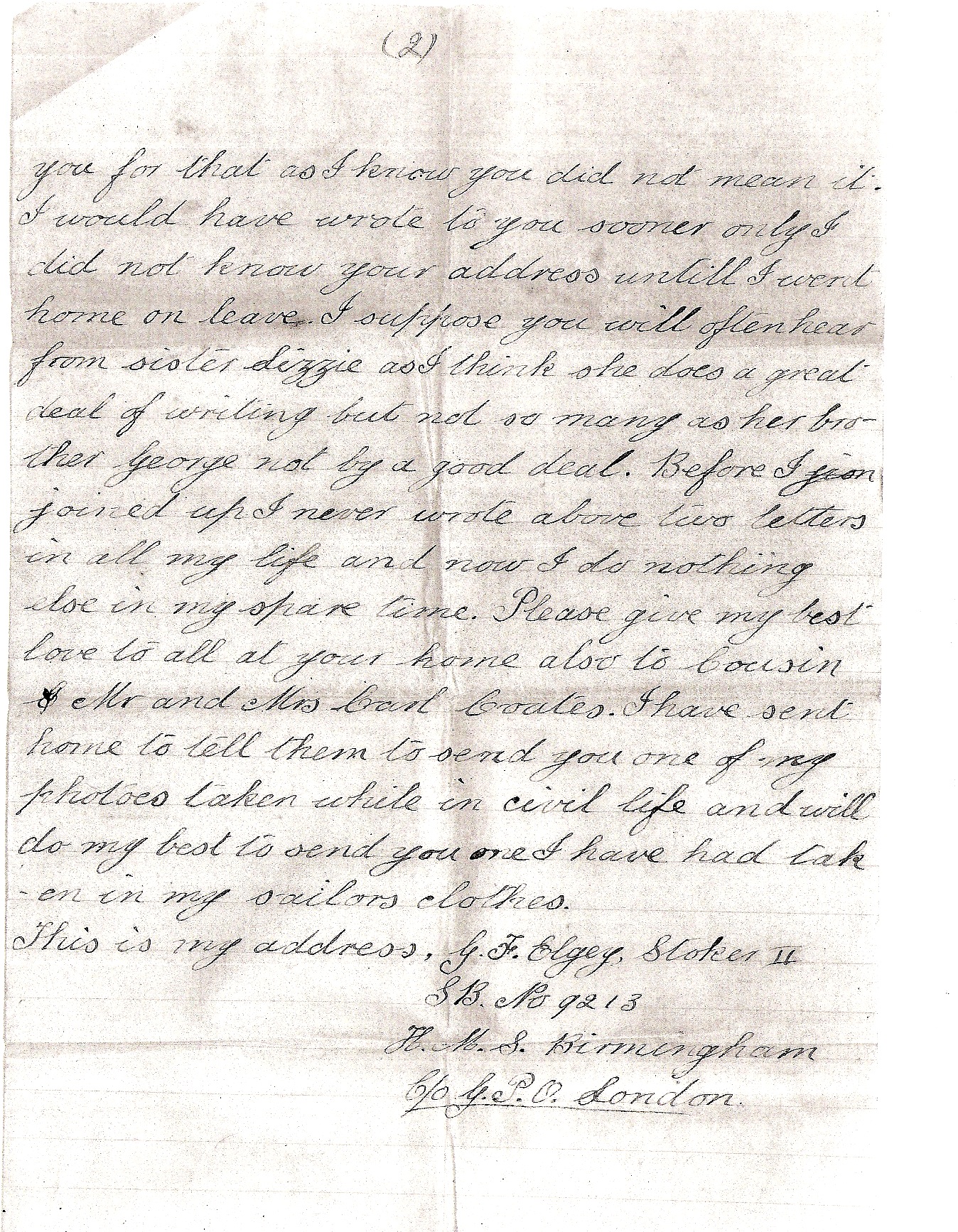
Friday Aug. 30th 1918.                                                         H.M.S. Birmingham,
C/o G.P.O. London
Dear Cousin,

Just a few lines – hoping this finds you in the best of health as it leaves me in the pink at present. I think sister Lizzie will have sent you word by now to let you know I joined the Navy a good while since well I can assure you it is a healthy life besides that we can learn a good deal which will be very usefull to us after this war is over. I meet many of American Sailors while I were down the south of England 400 miles away from my home called (erasure) a very beautifull place to. By the time you receive this I will be some where on the mighty ocean hunting for fishes which have done damage during this great war but now we have got our friends the Americans to help us it should not be long before it is finished let’s hope so. Can you remind of the time you sent me a letter calling me for not writing to you well I will excuse you for that as I know you did not mean it. I would have wrote to you sooner only I did not know your address untill I went home on leave. I suppose you will often hear from sister Lizzie as I think she does a great deal of writing but not so many as her brother George not by a good deal. Before I joined up I never wrote above two letters in all my life and now I do nothing else in my spare time. Please give my best love to all at your home also to Cousin Mr. and Mrs. Carl Coates. I have sent home to tell them to send you one of my photoes taken while in civil life and will do my best to send you one I have had taken in my sailors clothes. This is my address,

G. F. Elgey, Stoker II
SB. No 9213
H.M.S. Birmingham
C/o G.P.O. London

Eveline had a strict policy regarding correspondence. She promptly answered letters she received. In turn, she expected a reply within a reasonable amount of time. If one of Eveline’s letters went unanswered, she would write to you again, but with an admonishment and possibly a note that this would be the last letter you received until she heard from you. I know this from personal experience. The letter above confirms that grandmother instituted this policy early in life – evidenced by the scolding previously delivered to George. Now aboard ship, George had plenty of time for writing letters.

The cousin, Carl Coates, referred to in the letter is one of Eveline’s older brothers.

H.M.S. Birmingham 1916

George’s signature indicates his rank as Stoker II. The little research I have done informs me that stokers were in charge of generating steam for the turbines that powered the ship. The HMS Birmingham carried both coal and oil as fuel. Young George may have spent many hot and dirty hours shoveling coal into the boilers. Or he may have done maintenance on the engines. In any case, he made no complaints about his duties, assuring Eveline of his healthy life aboard ship.

Although the H.M.S. Birmingham was involved in several battles during World War I, most famously for being the first cruiser to sink a submarine, the time George spent on the Birmingham seems to have been relatively uneventful.

I wonder if George prepared his Christmas cards before the war ended on November 11?

I still have a lot of research to do regarding George and his service in the Royal Navy. In fact, I still have a lot to learn about all of the “English cousins”.

Lastly,the prompt above suggests not only ships, but crowds and travel. As I am posting this on Friday Oct. 5th, I’ll finish with something completely unrelated to George, the Navy, or ships and pay tribute to the British invasion that began 50 years ago with the release of this song:



Sepia Saturday – Six Shrinking Sisters

Sepia Saturday provides an opportunity for genealogy bloggers to share their family history through photographs.

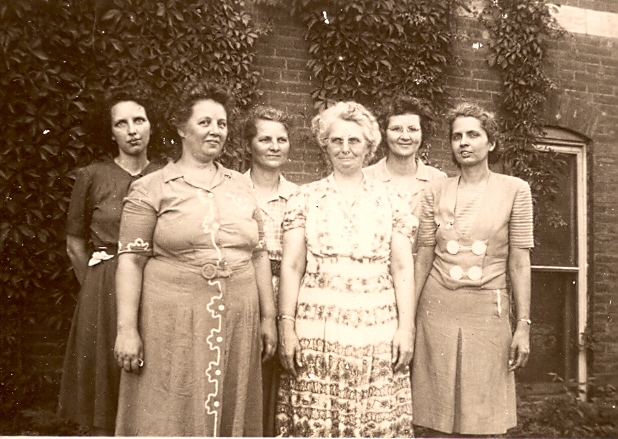
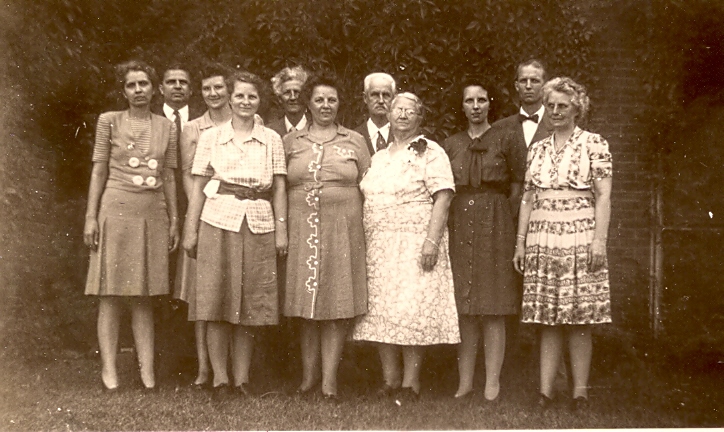
Four pages of my Grandmother Abbie’s photo album are devoted to various configurations of family in photos taken on the same day. According to the back of one photo, the pictures were taken on Father’s Day (June 16), 1946 at First Baptist Church in Iowa City, Iowa.

This first picture is of my grandmother’s family of origin – 6 girls, 3 boys, and 2 parents.

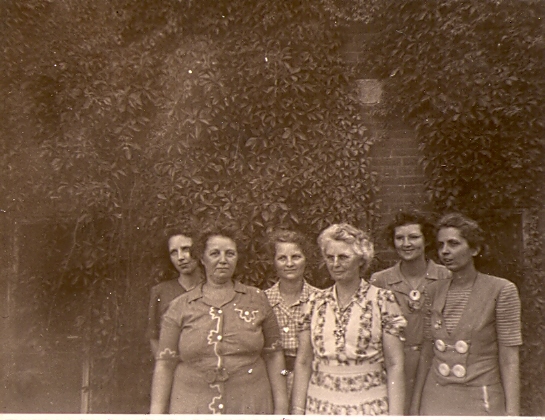
Another picture was taken of just the six sisters, who have all lost their legs.

My grandmother seems to find this amusing.

Not so happy now that they have all nearly disappeared.

If another picture of the six sisters was taken that day, we might mistake it for a picture of the vine-covered church building.

Please visit other bloggers who participate in Sepia Saturday. It’s always interesting!

I’ve shared a bit about my grandmother, Abbie Elizabeth Webber, and her brother, Fred Myron Webber, previously. Feel free to click their tags and get to know them.


An Excuse, An English Lesson, and Memories Shared

It’s been a little quiet here recently.

One reason for the lack of posts is my volunteer job. I teach English as a Second (or Other) Language at my church twice a week. We have a fantastic lead teacher who prepares all the lessons, and all the rest of us have to do is show up and work through the lesson with a small group of students.

Well, our fantastic leader is on vacation and she left me in charge. She gave me some lessons from a couple years ago (she’s recycling) that I could use – but they “need some work,” she said. I knew that any changes I made would not improve her lessons, so I decided to write my own instead.

I am not a trained teacher – I just stumbled my way into this. Preparing a lesson takes me a lot of time. So I’ve been writing lessons rather than blog posts.

I think I’ve found a way to recycle a blog post into an English lesson and then recycle that lesson into a blog post. Lazy?  Or brilliant?

The Spit-Up Chair

If you are a regular reader here, you know that I have a few posts that I refer to as “Chair Memories.” I decided to use my cousin’s poem, “The Gold Recliner” as the starting point for yesterday’s ESL lesson. Then I took an excerpt from my memory of “The Spit-Up Chair” to expand on the idea of an object that evokes a memory.

I was concerned that the sadness of the poem could be upsetting to some of our students who have suffered losses. A few of our students are refugees from war-torn countries. Others have grieved the loss of loved ones, as we all do. And I didn’t want the morning to be depressing, so I tried to “soften” things a bit by adding discussion questions about memories elicited by music, or a smell – and whether or not one has a good or bad memory…. that kind of thing.

The last part of the lesson asked the students to write about an object that holds memories for them and to share the story with their group.

I am sorry to report that I made Mrs. Li cry.

As Mrs. Li, an older woman from China, told us about the china tea cup (a real Chinese china tea cup) given to her by her younger brother who has since died, tears began to roll down her cheeks. I wasn’t sure if she could finish, but she did.

A woman from Mexico, here in town to visit her grandson, told us that her grandson reminds her of her son when he was a baby and that her wedding ring brings back many happy memories surrounding her wedding.

A young woman from Korea read her story of a pair of white athletic shoes – a gift from her boyfriend (now husband)… how the left shoe was too tight but then stretched to fit perfectly; how she would not wear the shoes in the rain or on unpaved surfaces; how she met her fitness goals in these shoes; and how she lost the left shoe. No longer in possession of the left shoe, she threw the right shoe away.

I think I saw tears begin to well in her eyes as she talked about a pair of athletic shoes.

A woman from Russia related memories of her first days in school and the kindness of her teacher.

A man from Mexico told us about his first watch – a gift for his 8th birthday. He was so proud of his watch with the Roman numerals on the clock face that he was constantly reporting the time to anyone within earshot. Eventually the watch needed a new wristband – and his mother accidentally lost the watch.

A young man from Spain told us about summers spent at his grandmother’s house in a small village and the good times he had there.

A young mother from Japan told us about a trip she took to Cambodia with her American friend (he was just her friend!). They visited the Killing Fields. They volunteered at a school where they taught a little Japanese and English to the children. To thank them, some children reached up and picked leaves from a coconut tree and formed them into two rings, then placed the rings on the ring finger of her left hand and her friend’s left hand. It was then that they knew they were to be more than friends. Now they are married with one child and another on the way.

An older man from Vietnam arrived very late to class. The other students were already writing so I gave him a quick summary of what he had missed and what the students were doing. He sat and thought while the others wrote. After the students had shared their stories, I asked if he wanted to share a memory. “No. I try to forget. Not good for me to remember. Like her (nodding to Mrs. Li), I would cry,” he said.

*********
Photo Credit: Coconut Flower by Mohammad Mahdi Karim/Wikipedia/Creative Commons Licence